
A six-year-old in Toronto watched a boy using a wheelchair reach the bottom of her front steps on Halloween night and stop there, because the stairs went up and he could not. Most of us would have felt the pang, handed down an extra chocolate bar, and moved on. Siena Padulo asked her dad a sharper question: why should a set of stairs decide who gets to trick-or-treat?
Eight years later, that one question has put more than a quarter of a million lawn signs on Canadian front yards, and this year it is trying something no Halloween movement in this country has attempted before.
Rich Padulo emailed me this week. If you watch a bit of television every October, you may have seen him: the dad who keeps turning up on the news trying to make Halloween a national act of inclusion. He wrote to SocialDad (thanks for the ego boost) because, in his words, this whole thing started with a dad and his daughter. He is not wrong about the DNA. That is more or less how SocialDad started too. So I dug into his story, and it is a good one.
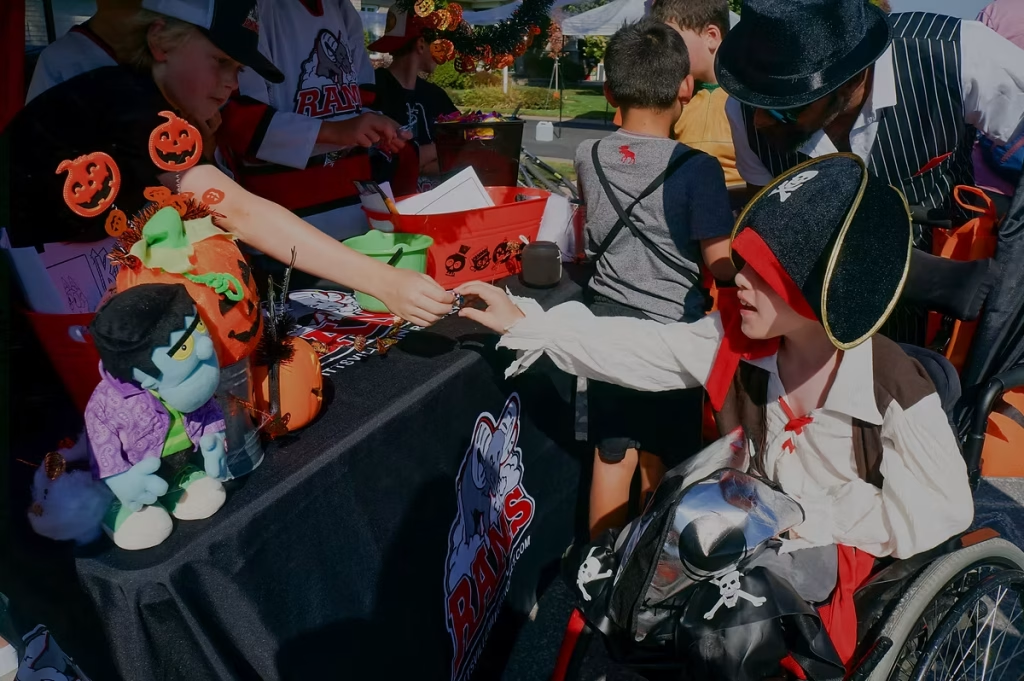
It started on one driveway
In 2017, Siena Padulo was six. She noticed the boy in the wheelchair could not get up the stairs to the family’s front door, and she was gutted by it. Her dad’s answer was almost insultingly simple. They moved the treat station to the end of the driveway, and they put up a sign a week early so families would know the house was accessible.
Seven families came that first Halloween. Neighbours started asking for signs of their own. As Rich told the Toronto Guardian, it grew from one driveway into a nationwide movement, and more than 250,000 Treat Accessibly lawn signs have now been handed out across Canada.
The fix is almost embarrassingly simple
Here is the part that stuck with me as a parent. You do not need a ramp, a renovation, or a budget. You need to step outside.
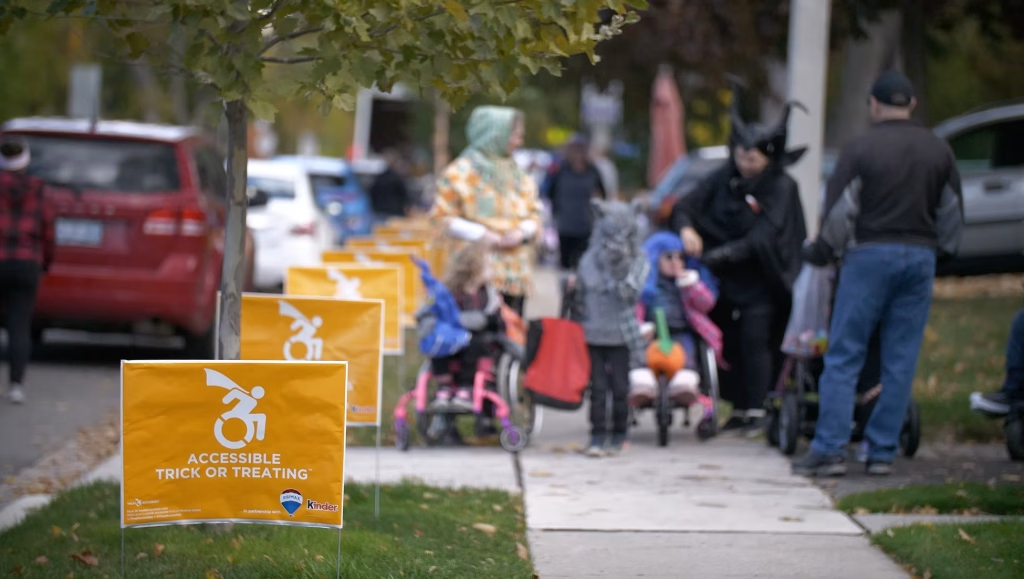
Set your treats up at the driveway or the sidewalk instead of the front door. Keep a mix of edible and non-edible treats so allergies and dietary needs are covered. That is it. Padulo told the Surrey Now-Leader that moving outside removes about 90 per cent of the barriers for kids with mobility, sensory and neurological disabilities. Ninety per cent, from one small change most of us could make in five minutes.
The free lawn signs are stocked at Pet Valu stores and available from Re/Max agents, as Global News has reported. And here is the honest bit I appreciated: this is not a charity. The Padulos do not take donations. National partners like Canadian Tire, Re/Max, Pet Valu and Kinder fund the free signs and the street rewards, and the whole operation still runs out of the family’s kitchen. No fundraising ask, no guilt trip. Just a good idea and a lot of neighbours.
Watch why they started
Rich sent along a short video of how it began and how it went national. It runs about a minute, and Siena explains the why better than I can.
From nine villages to a nation of streets
Since 2021, Treat Accessibly has run its Halloween Villages: entire blocks shut down so every homeowner hands out treats from outside. They have staged 35 of them across nine cities, drawing 25,000 guests in 2025 alone. Surrey hosts the only Village in British Columbia, and this year more than 2,000 people registered before the free tickets sold out.
The Villages work. The catch, as Padulo laid out on LinkedIn, is that every Village is a production, and every production has a budget, and the budget decides how many kids get to come. Events have a ceiling. Halloween itself does not.
So for 2026 the family is flipping the model. Halloween lands on a Saturday for the first time since 2020, which is a rare gift for trick-or-treating. Instead of building a handful of events, Treat Accessibly is asking the streets that already go all-out every October to nominate themselves and get the free signs, the rewards, and the recognition. Fewer stages, more front yards.
The numbers already rolling in
This is the part that made me sit up. Seven days after the campaign went live this summer, 100 of Canada’s busiest and kindest trick-or-treating streets had nominated themselves, across 56 cities and towns. Those streets alone welcome around 36,000 trick-or-treaters between them.
The target is 1,000 streets. The milestone after that is one million homes. When a movement can go from one driveway to a thousand streets, the maths stops being about candy and starts being about how a whole country decides to treat its kids.
Vancouver’s kindest streets belong on this list
Rich mentioned Vancouver by name, and he is right to. Every neighbourhood on the North Shore and across the Lower Mainland has that one street. You know the one. The house with the fog machine. The family that decorates like it is a competitive sport. The block where cars slow down just to look. Those streets are already doing the hard part. This just makes sure the kid in the wheelchair, or the kid who cannot manage a dozen sets of stairs, or the kid whose senses get overwhelmed at the front door, gets to be part of it too.
Who this is for, and who it isn’t
This is for any family or any street that already loves Halloween and wants everyone included in it, no exceptions. It is for the neighbour who has quietly wondered how to be more welcoming and never knew the fix was this small.
It is not for anyone looking for a donation drive or a complicated programme to sign up for. There is nothing to buy and no money to give. If you were hoping to write a cheque and feel good, this will disappoint you. If you were hoping to actually change how one night feels for a child, it will not.
How to get your street, or just your driveway, on the map
Three ways in, in rising order of effort:
- Nominate a street. If you know the block that goes hardest every October, put it forward on Instagram, on Facebook, or straight through the Treat Accessibly nomination page.
- Grab a free sign. Pick one up from a Pet Valu store or a local Re/Max agent and put it on your lawn a week or two early so families can plan their route.
- Just move outside. No sign, no nomination, no problem. Set your treats up at the end of the driveway this year and you have already removed most of the barriers.
I started SocialDad because I believe an ordinary dad, working alongside his kids, can build something that matters. Rich and Siena Padulo are proof of the same idea, at a scale that started on a single driveway and is now measured in cities. One child’s question, a nation of neighbours, and every kid reaching the treat on Halloween night.
Over to you. Which street in your neighbourhood goes hardest at Halloween, and should it be on the list? Tell me in the comments, and if you know the family behind it, tag them. Let’s get a few of Vancouver’s kindest streets nominated before October.
Written for SocialDad.ca. Story shared with permission from Rich Padulo of Treat Accessibly. Figures drawn from Global News, the Surrey Now-Leader, the Toronto Guardian, and Treat Accessibly’s own accounts.


Leave a Reply