By James R.C. Smith
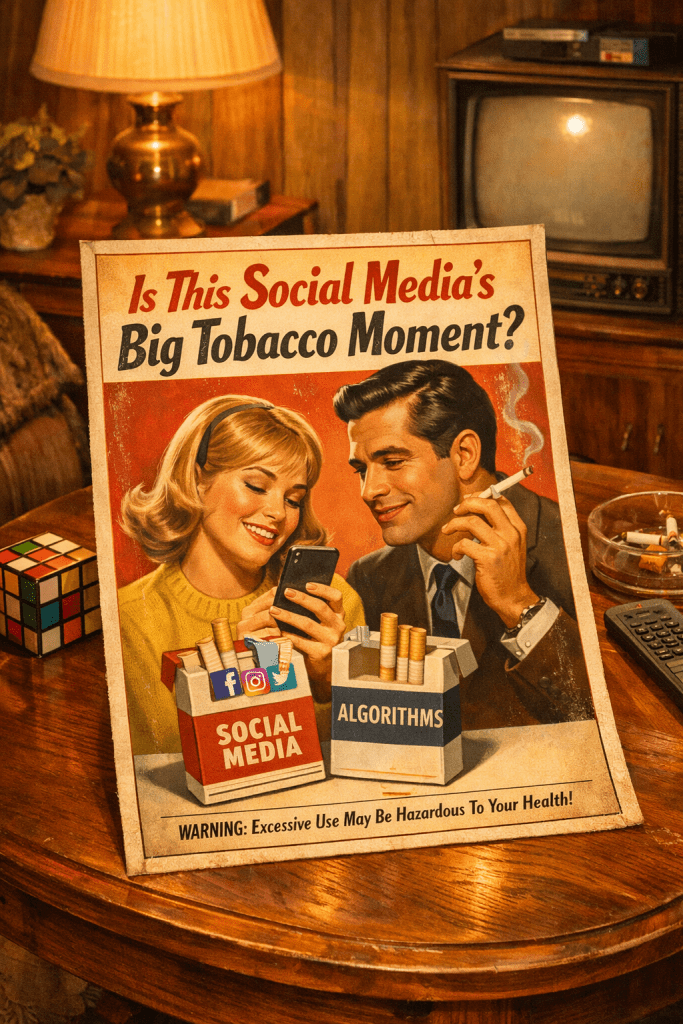
On February 18, 2026, Mark Zuckerberg sat in a Los Angeles courtroom and faced a jury for the first time. Outside, parents who had driven from across the country stood in the rain. Some had lost children to suicide. Others watched their daughters spiral into eating disorders and body dysmorphia. All of them pointed to the same thing: Instagram.
It was a scene that felt familiar to anyone who studied the tobacco trials of the 1990s. Back then, it was executives from Philip Morris and R.J. Reynolds facing plaintiffs who argued their products were knowingly engineered to addict, that internal research had been buried, and that children were the industry’s most valuable long-term customers. The companies fought hard, lost bigger, and ultimately paid $206 billion in the 1998 Master Settlement Agreement — roughly $410 billion in today’s dollars.
History is rhyming again. The question is whether we’re close enough to the end of that first verse to do something meaningful about it.
“We can no longer rely on social media’s mantra, ‘Trust us.’ My hope is that we will make Big Tech the next Big Tobacco in terms of a concerted effort to reduce its harm.”
— Senator Richard Blumenthal (D-CT), Senate Judiciary Committee Hearing, November 2023
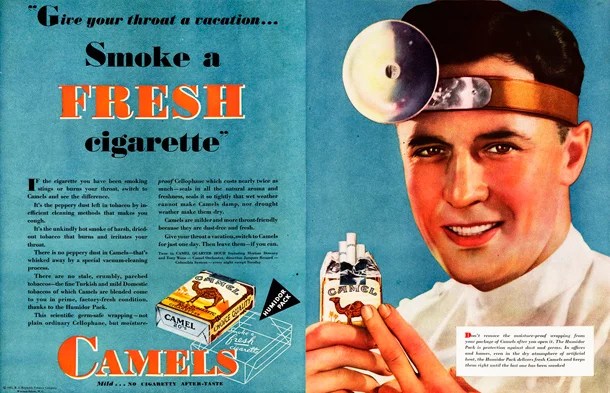
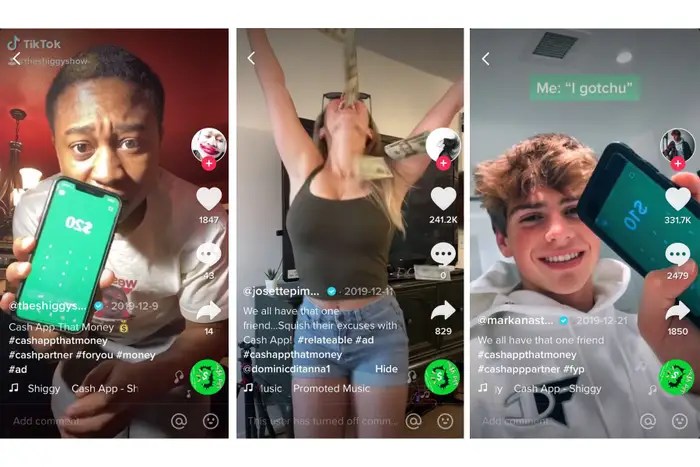
The Parallel That Won’t Go Away
The comparison between Big Social and Big Tobacco isn’t a poetic flourish. It’s the actual legal and strategic framework being used to dismantle these companies in court. The same law firms that negotiated the 1998 tobacco settlement — Lieff Cabraser and Motley Rice — are now leading plaintiff cases against Meta, TikTok, YouTube, and Snap. Their playbook is nearly identical: prove the company knew about harm, demonstrate it concealed that research, and show it specifically targeted children.
In the tobacco era, the smoking gun was the discovery of internal documents proving executives knew nicotine was addictive while publicly denying it. In the social media era, that document trove came from Frances Haugen — the former Facebook engineer who, in 2021, copied tens of thousands of internal files before she left the company. What those files showed was stark: Meta’s own researchers had found that Instagram made body image worse for one in three teenage girls. Executives saw the research and chose growth anyway.
| Category | Big Tobacco (1950s–1998) | Big Social (2010s–Present) |
|---|---|---|
| Core allegation | Products engineered to be physically addictive | Platforms designed to maximize compulsive use |
| Internal knowledge | Secret nicotine addiction research suppressed for decades | Internal teen mental health harm studies buried (Haugen docs, 2021) |
| Youth targeting | Joe Camel cartoon; candy-flavored products to hook young smokers | Infinite scroll, push notifications, filters engineered to hook under-18s |
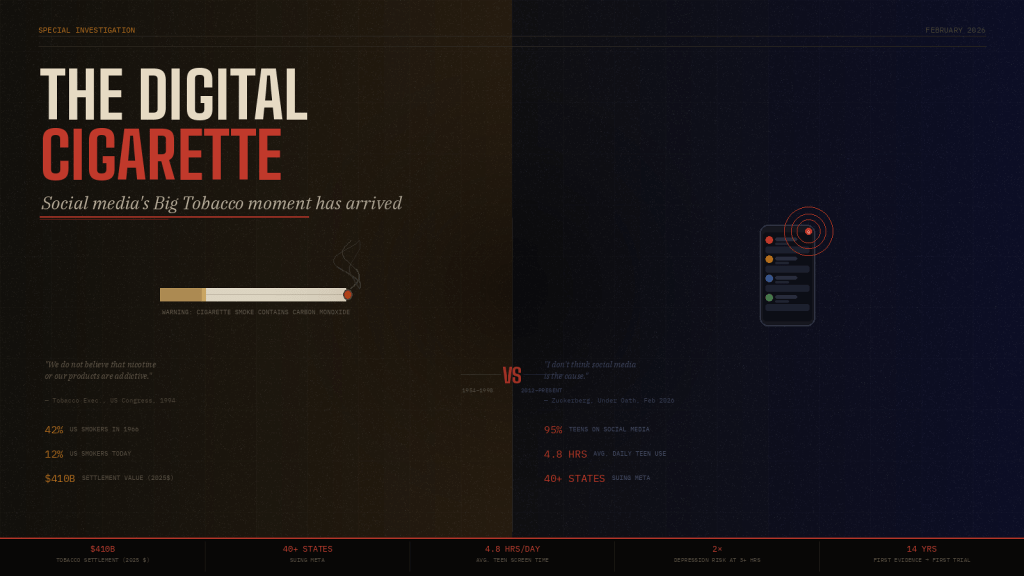
| Public denial | “We don’t believe nicotine is addictive” — 1994 congressional testimony | “I don’t think social media is the cause” — Zuckerberg, February 2026 |
| Legal turning point | 1994: Internal docs leaked; 1998: $206B settlement | 2021: Haugen leaks; 2026: First jury trial underway in Los Angeles |
| Regulatory parallel | Surgeon General’s Report on Smoking, 1964 | Surgeon General’s Advisory on Social Media, 2023; warning labels proposed, 2024 |
Built to Hook You. By Design.
This isn’t speculation. The trial underway in Los Angeles centers on specific engineering choices: infinite scroll (which removes natural stopping points), push notification timing (calibrated to maximize re-engagement during vulnerable hours), algorithmic amplification of emotionally provocative content, and “like” counts as social validation metrics that trigger dopamine responses particularly pronounced in developing adolescent brains.
Plaintiffs’ expert witnesses — including psychologists and neuroscientists — have testified that these features activate the same dopamine-driven feedback loops exploited by slot machines, and that the effects are measurably more acute in adolescents whose prefrontal cortexes, the brain’s impulse-control center, are still forming.
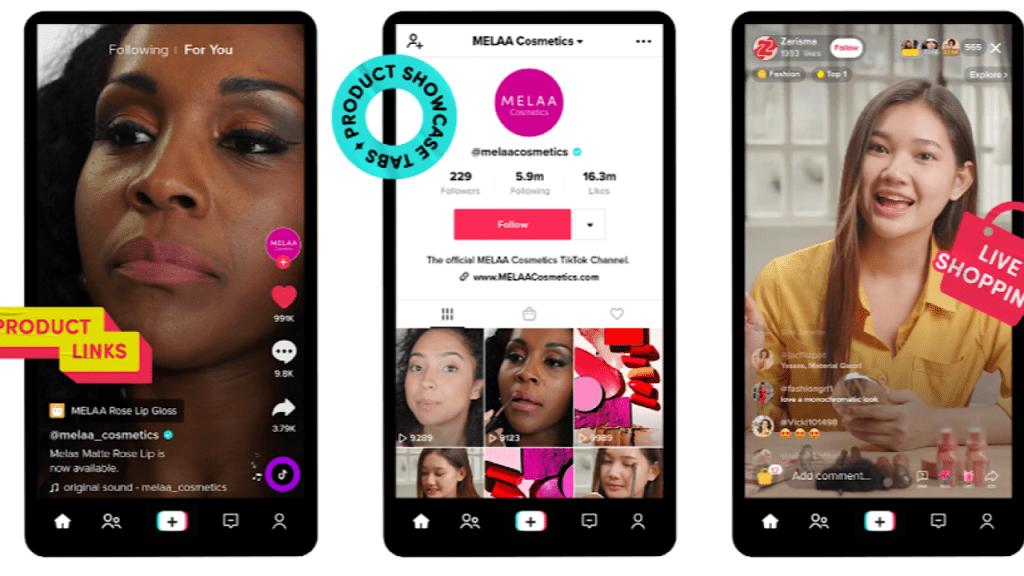
One internal Meta email, surfaced during discovery, had an employee describing the goal as optimizing for teens “sneaking a look at your phone under your desk in the middle of Chemistry.” Another internal document from 2024 stated plainly: “acquiring new teen users is mission critical to the success of Instagram.”
Separate internal documents revealed that in 2016, Meta ordered engineers to maximize “total teen time spent” on Instagram and Facebook. This wasn’t peripheral product thinking. It was the core company strategy.
The Mechanism: How the Hooks Compare
| 🚬 Big Tobacco’s Hooks | 📱 Big Social’s Hooks |
|---|---|
| Nicotine levels precisely manipulated for maximum dependency | Infinite scroll removes stopping cues, extending sessions indefinitely |
| Candy-flavored products to lower the entry barrier for youth | Variable reward: unpredictable “likes” trigger dopamine like slot machines |
| Joe Camel cartoon made smoking feel cool and youthful | Algorithmic amplification of emotionally extreme content keeps users engaged |
| Menthol masked harshness and eased product initiation | Push notifications timed to maximize re-engagement anxiety |
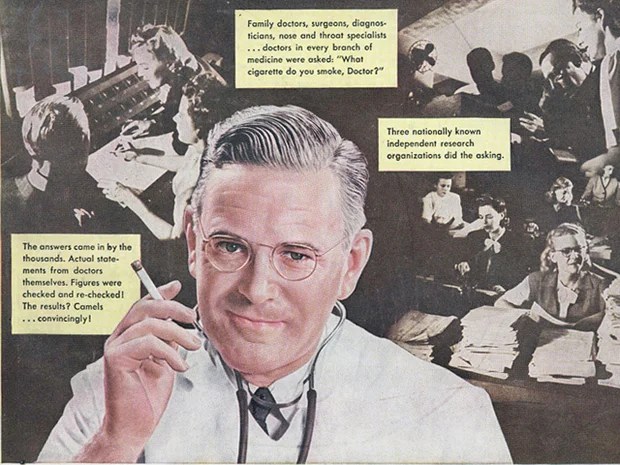
| Celebrity endorsements normalized smoking as a social behavior | Influencer culture normalizes compulsive self-documentation and comparison |
The Numbers Are Hard to Look Away From
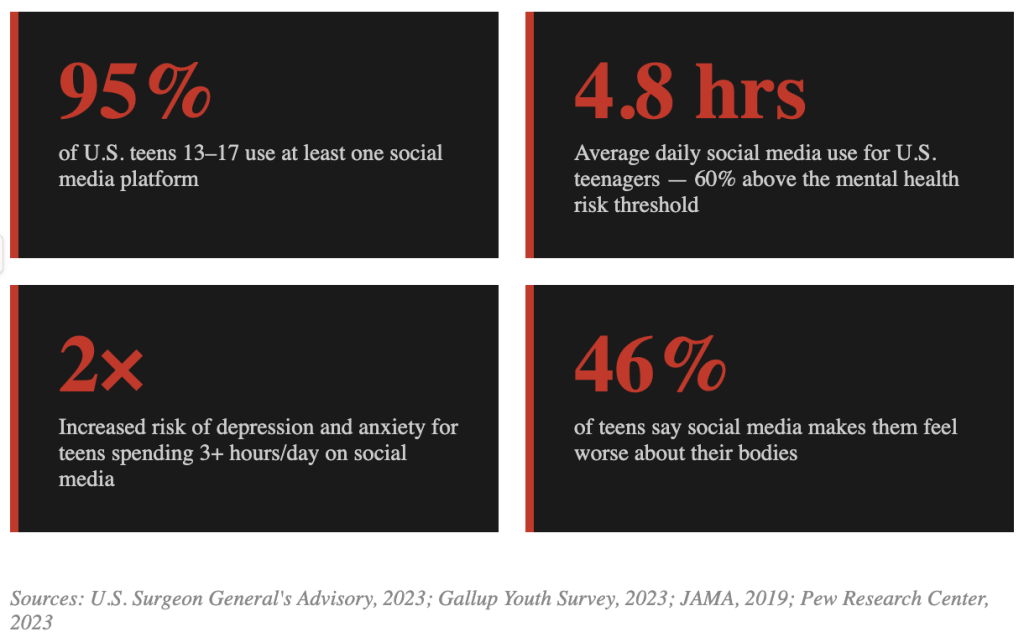
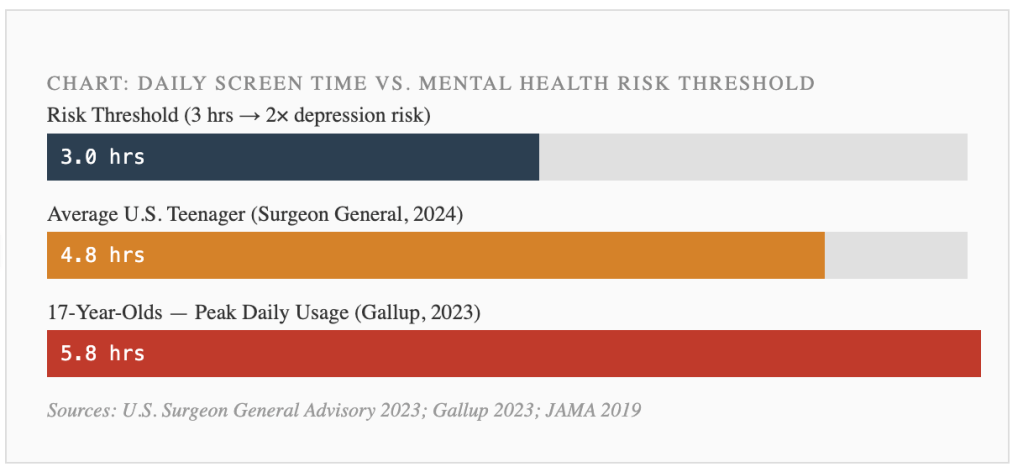
The U.S. Surgeon General’s 2023 Advisory on Social Media and Youth Mental Health compiled what the science actually shows. Teenagers who spend more than three hours a day on social media face double the risk of depression and anxiety. The troubling part: the average U.S. teenager now spends 4.8 hours a day on these platforms. Seventeen-year-olds average 5.8 hours.
Nearly half of all adolescents — 46% — say social media makes them feel worse about their bodies. Roughly 64% say they regularly encounter hate-based content. And 60% of teenage girls report being contacted by a stranger on social media in ways that made them uncomfortable.
The Courtroom: Where This Generation’s Story Gets Written
The trial underway in Los Angeles is the first bellwether case in what could become thousands of lawsuits. The plaintiff, a 20-year-old identified as “Kaley,” opened a YouTube account at age eight, Instagram at nine, TikTok at ten, and Snapchat at eleven. By the time she was a teenager, she was documented spending more than 16 hours in a single day on Instagram. She claims the platforms’ addictive design led directly to anxiety, body dysmorphia, and suicidal thoughts.
Snap and TikTok settled their portions of the case before trial for undisclosed sums. Meta and YouTube chose to fight.
Zuckerberg’s testimony was revealing in ways that transcended his actual words. Plaintiffs’ attorneys showed jurors emails from 2014 and 2015 in which Zuckerberg had laid out specific goals to increase time spent on the apps by double-digit percentage points — directly contradicting his 2024 congressional testimony that the company never set goals around maximizing time spent. When pressed, he said: “If you are trying to say my testimony was not accurate, I strongly disagree with that.”
The parallel to tobacco is direct. In 1994, seven tobacco executives stood before Congress and each swore, under oath, that they did not believe nicotine was addictive. Those testimonies became the hinge point of the 1998 settlements. The documents existed. The denials existed. History judged them accordingly.
“This is the first form of real accountability that he’s had to face, and he’s just not used to it.”
— Frances Haugen, Meta Whistleblower, on Zuckerberg’s trial testimony, February 2026
“The fact that I was obsessively suicidal at the age I was — that was not just my brain chemistry. That was my brain chemistry being altered by the platform I was on. Social media shaped my brain.”
— Taylor Little, Social Media Addiction Victim, quoted in lawsuit proceedings
Two Timelines: Tobacco Then, Social Media Now
The arc from public harm to legal reckoning took nearly five decades with tobacco. With social media, it’s moved in fourteen years. That acceleration matters — partly because we learned from tobacco, and partly because the harm is trackable in real time and documented by the companies themselves.
| 🚬 Tobacco Timeline | 📱 Social Media Timeline |
|---|---|
| 1950: First major research links smoking to lung cancer | 2012: Early research links heavy social media use to adolescent depression |
| 1964: Surgeon General’s landmark report on smoking and health | 2021: Frances Haugen leaks internal Meta research. “The Facebook Files.” |
| 1966: First cigarette warning labels required on packaging | 2023: U.S. Surgeon General advisory issued. 42 state AGs sue Meta. |
| 1994: Seven executives swear before Congress nicotine is not addictive | 2024: Zuckerberg apologizes to Senate. KOSA passes 91–3. Warning labels proposed. |
| 1998: $206B Master Settlement Agreement signed | 2025: Australia enacts world’s first under-16 ban. France follows in January 2026. |
| Time from first evidence to settlement: ~48 years | Feb 2026: Zuckerberg testifies under oath. First bellwether trial begins. Time from first evidence to first trial: ~14 years |
The Legislative Reckoning
The trial is only one front in a multi-jurisdictional war. Over 40 state attorneys general have sued Meta. The Kids Online Safety Act passed the U.S. Senate 91–3 in 2024 before stalling in the House. The federal government remains gridlocked, but other countries aren’t waiting.
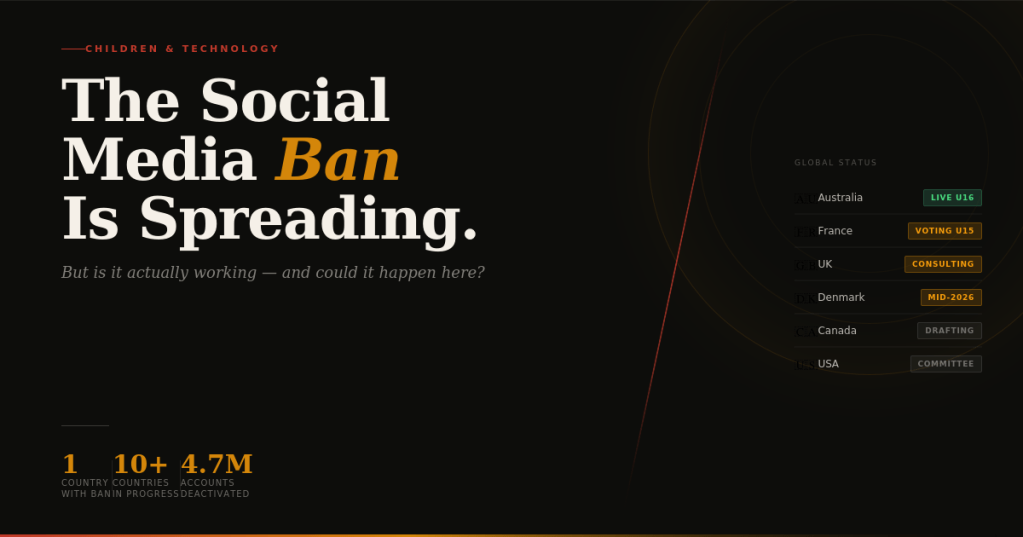
Australia banned under-16s from social media in December 2025 — the first country in the world to do so. France’s National Assembly followed in January 2026, approving an under-15 ban 130 votes to 21. Spain enacted its own ban shortly after. At last count, at least 15 European governments are considering similar legislation.
The United States has passed exactly one major federal child online safety law in the internet era: the Children’s Online Privacy Protection Act, in 1998.
A Marketer’s Perspective: How We Got Complicit
I’ve spent over a decade building marketing and communications strategy across B2B SaaS, consumer brands, financial services, and retail. I’ve sat in briefings where the question was “how do we drive engagement?” and watched the answer almost always bend in the same direction: make the experience stickier. Trigger-based email sequences timed to moments of vulnerability. A/B tests that reward clicks at the expense of comprehension. Social content calendars built to feed algorithmic hunger, not audience need.
None of this required malicious intent. The incentive structures did the work. And that’s the point: the architecture of digital marketing sits on a foundation built by platforms whose core design objective is to maximize time on site, not improve anyone’s life. The brands that use these platforms — including many I’ve worked with — are secondary beneficiaries of an engagement model that treats human attention as the commodity and human wellbeing as, at best, a secondary consideration.
The tobacco comparison stings because it’s accurate in a way that implicates the whole ecosystem. Tobacco companies made the cigarettes, but they also needed retailers, advertisers, brand partners, and a media industry willing to carry their messaging. The accountability eventually moved outward from the manufacturers.
The question every marketer should be sitting with right now: what are we actually optimizing for, and at whose expense?
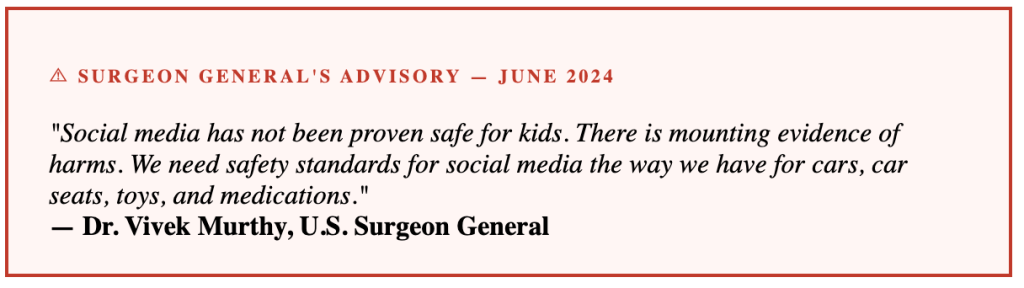
⚠ Surgeon General’s Advisory — June 2024
“Social media has not been proven safe for kids. There is mounting evidence of harms. We need safety standards for social media the way we have for cars, car seats, toys, and medications.”
— Dr. Vivek Murthy, U.S. Surgeon General
The Financial Scale of What’s Coming
The 1998 tobacco Master Settlement Agreement totalled $206 billion — roughly $410 billion in today’s dollars. It covered 46 states and restructured how the entire industry marketed its products. Joe Camel disappeared. Billboards near schools came down. The Truth Initiative was funded and required to operate in perpetuity.
Meta’s current market capitalization is approximately $1.7 trillion. That context explains why the company is fighting rather than settling. A verdict in the Los Angeles case would open the door to hundreds of additional claims, potentially including large class actions. The financial math alone explains why Zuckerberg chose the witness stand.
What Happens After the Reckoning
The tobacco precedent is worth studying carefully here, because the settlement didn’t end tobacco. U.S. smoking rates were at 42% when warning labels first appeared in 1966. Today, they’re around 12%. That decline took six decades and required more than litigation: public health campaigns, school education programs, smoke-free legislation, and tax policy all contributed. The settlement was a turning point, not a finish line.
If the social media cases follow a similar arc, we should expect a period of forced transparency, mandated safety features, restrictions on youth-targeting algorithms, required disclosure of internal research, and ongoing payments to fund digital literacy programs. Some version of that future is already taking shape in Australia, France, and Spain.
For brands and marketers, the implications are arriving now. Platforms are under pressure to implement teen account restrictions, parental controls, and content filtering. TikTok and Snap settled rather than fight. The platforms that survive this era will be the ones that reconfigure their business models before regulators force the issue — the same way tobacco companies that adapted to smoke-free environments fared better than those who fought every restriction to the last.
Where We Actually Are
The tobacco industry had never lost a single case in over 800 lawsuits before 1997. Then the internal documents came out. Then the states got involved. Then the executives testified under oath. Then $206 billion changed hands.
We are, right now, at the point where the internal documents have come out. The states are involved. The executives are testifying under oath. The first jury is deliberating.
Surgeon General Murthy drew the tobacco comparison explicitly when he called for warning labels in 2024, noting that when tobacco warnings were implemented in 1966, 42% of Americans smoked. Today it’s 12%. He framed social media as this generation’s equivalent public health emergency.
The ADL stated it plainly: “These platforms often seem like drugs, designed to hook users, create a dependency, and alter behavior — often for the worse.”
Whether the platforms reform, whether regulators act, whether the trial verdicts land where plaintiffs hope — none of that changes the underlying reality established in court filings, whistleblower testimony, internal documents, and a decade of peer-reviewed research. These platforms were built to be hard to leave. They knew. They chose not to change. And now they’re sitting where Philip Morris sat in the late 1990s: still fighting, but with the documents already in the public record.
The arc of that story is not in doubt. The timeline is.
James R.C. Smith is a marketing and communications professional with over a decade of experience across B2B SaaS, consumer brands, financial services, and technology. He writes about the intersection of brand strategy, digital ethics, and the business of attention.
Sources: CNN (February 18, 2026); U.S. Surgeon General’s Advisory on Social Media and Youth Mental Health, HHS.gov (2023); Surgeon General’s call for warning labels (June 2024); Gallup Youth Survey (2023); NPR (November 2023); Fortune (October 2023); The Wrap (February 2026); TIME (November 2025); Al Jazeera (February 18, 2026); Malwarebytes (February 2026); Lawsuit Information Center (February 2026); American Museum of Tort Law; Pew Research Center (2023); JAMA (2019); Truth Initiative (2023); Ranker et al., Addictive Behaviors (2024), Boston University School of Public Health.


 Socialdad.ca
Leave a comment